

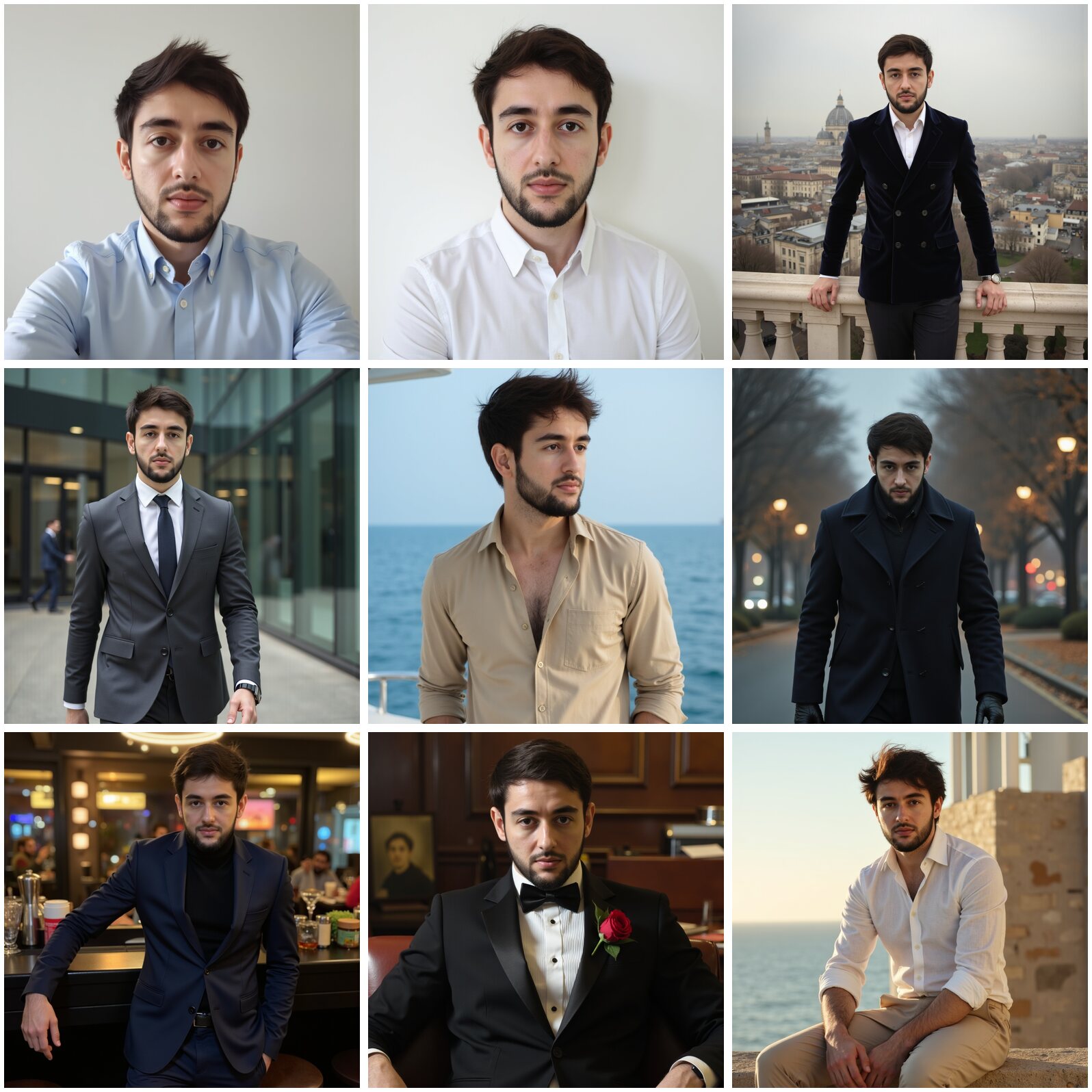
FaceApp is safe to use by its own written rules: under the FaceApp privacy policy last updated 4 November 2024, the photos you edit are encrypted with a key that stays on your phone, cached on Google Cloud or Amazon Web Services servers, and deleted "within 24 to 48 hours" after your last edit, and FaceApp says it does not use them "for any reason other than" the edit you asked for. The catch is what FaceApp is: a filter app that changes one photo of your face. If what you actually want is realistic new photos of yourself for LinkedIn or a dating app, Narkis trains a private model on 15 to 20 of your selfies, with no human review, and gives you up to 200 photos for $27, paid once, with no subscription to cancel.
Why People Ask "Is FaceApp Safe?"
The question dates from July 2019, when FaceApp's old-age filter went viral and its developer, Wireless Lab, was based in St. Petersburg, Russia. Most of the Reddit threads that still rank for it come from that wave; one r/iphone post from that summer warns people not to use FaceApp if they want to keep the rights to their photos.
Today the app is published by FaceApp Technology Limited, with an office in Limassol, Cyprus, and its content is protected "under the laws of the Republic of Cyprus, the European Union". The App Store lists the same company as the seller, with a 4.7 rating from 1.8 million reviews.
What FaceApp Does With Your Photos in 2026
Five rules from the current privacy policy and terms, quoted from FaceApp's own pages:
- Only the photo you pick leaves your phone. "You only send to the cloud the photographs or videos that you specifically select for editing", and FaceApp says it does not collect your albums even if you grant access.
- Encrypted with your key. Each photo is protected "using an encryption key stored locally on your device", so "the only device that can view the photo or video is the device from which" it was sent.
- Deleted in 24 to 48 hours. The cloud servers are set "to delete photographs and videos, and the information associated with those photographs and videos, within 24 to 48 hours after the photograph or video was last edited".
- No other use. "We do not use photographs or videos you provide when you use the Apps for any reason other than to provide you with the editing functionality of the Apps." It also says "We do not sell personal information."
- A narrower license than in 2019. For your photos, the 2024 terms grant FaceApp a license "during the term of this Agreement solely for the purpose of providing" the service. The "perpetual, irrevocable" wording people quoted in 2019 now appears only for feedback you send FaceApp.
You can wipe the cache before the 48 hours are up: in the app, Settings > Privacy & Legal > "Delete Cloud Photo Cache". Other data requests go to [email protected].
What FaceApp Still Collects
Photos are not the only data. The policy lists app usage (features used, launch times), device data (model, OS, IP address and the city and country it points to) and third-party SDKs that "may enable third parties to collect information directly from the App", with cookies and tracking for analytics and marketing where you consent. All of it is tied to an app instance ID rather than your name.
Safe With Your Photos, Careful With the Subscription
- FaceApp PRO is sold through the stores, at $10 to $100 per plan on the US App Store, and FaceApp does not receive your card details.
- Refunds go through Apple or Google: the terms say the store's refund policy applies and "FaceApp will have no refund obligations".
- US users agree to arbitration and a class-action waiver under section 12A of the terms.
- Cancel in the store, not by deleting the app: deleting it does not stop a renewing plan.
Is FaceApp the Right Tool for Headshots or Dating Photos?
FaceApp is a fast face filter: smile, age, hair, makeup, all applied to one photo you already have. That is fine for fun, and a gamble for a photo a recruiter or a match will compare with the real you, because a filtered face looks edited when people meet you.
That is the job Narkis is built for:
- A model of your face, not a filter: 15 to 20 selfies train a personal model, ready in a median 6.5 minutes, so every new photo is you in a new setting.
- Private by design: your uploads train only your own model, with no human review, and you can delete your model and data at any time (facts sheet).
- Paid once: $27 for up to 200 photos, credits never expire, nothing renews (pricing).
- Made for real uses: LinkedIn photos, dating profile photos, team headshots, travel and Instagram shots.
A studio headshot costs a median $321 in our data on 822 US cities (headshot cost calculator). Checking other apps too? Read what Lensa does with your photos, whether Remini is safe, whether Fotor is safe and what Reddit says about Facetune headshots, or see every option side by side in the AI headshot comparison.


