

Facetune is a legitimate app from Lightricks, a company incorporated in Israel and based in Jerusalem, and the App Store version (4.6 stars from 382,000 US ratings, rated 12+) is not malware. Whether it is safe for your face is answered by two documents Lightricks updated on 3 November 2026. The privacy policy says photos you use for AI effects are uploaded to the Lightricks Cloud and kept for up to 30 days, your face model can be kept for up to 2 years after your last use, and your photos only go into AI training if you separately consent. The terms of use go further: anything you import gives Lightricks a "perpetual" and "irrevocable" license to your content, including your "image, likeness". Here is what each part says, quoted, and what to switch off before you edit.
Who Is Behind Facetune
Facetune is published by Lightricks Ltd., the same company behind Photoleap, Videoleap and the LTX video model. The privacy policy names Lightricks Ltd., Yesha'yahu Leibowitz 30, Jerusalem, Israel as the data controller, and the terms say US residents contract with Lightricks US Inc. while everyone else contracts with the Israeli parent. Transfers of EU and UK data run under the Standard Contractual Clauses or the EU/UK-US Data Privacy Framework, according to the policy.
Facetune's own FAQ page answers "Is Facetune safe to use?" with a plain "Yes" and says it never sells your photos. That matches the policy. The details below are what the FAQ leaves out.
What Happens to Your Face in the Basic Editor
For the classic retouch tools (smooth, reshape, whiten), the policy says the work happens on your phone:
images, photos and videos are processed on your device for the purpose of determining the estimated location of parts of faces (such as the eyes, nose or mouth) and points on the face and eyes
It adds: "We do not collect or store Face Data on our servers or share it with third parties." If you only use the manual sliders, your face map stays on the device.
What does leave the phone is demographic data. The policy says Lightricks processes "age (or age group) and gender and other characteristics such as skin tone, which are either inferred from your images", and uses it to "market personalized offers" and for AI training, machine learning and internal development. The face map itself is excluded from marketing, the inferred age, gender and skin tone are not.
What Happens When You Use AI Effects
AI features (avatars, headshot editing, swaps, art styles) work differently. The selected content "is uploaded to the Lightricks Cloud", and:
The photos, videos and images you upload are stored for up to 30 days, except where you have: (i) provided us with consent to further retain the content you have uploaded for AI training and machine learning purposes
For AI avatars, the policy says Lightricks processes "10-25 images" and is "currently using the neural network model Stable Diffusion". Your generated results stay in the Lightricks Cloud until you ask for your account to be deleted.
If you turn on face recognition, Lightricks builds a model of your face from "facial geometry, topology, and face embeddings". Those models:
- are kept "within 2 years after the last time you have used our Services", unless the law requires longer;
- are not shared with third parties, per the policy;
- can go into AI training only "in the event you have separately provided us with consent for such use";
- are deleted within 24 hours on the Facetune Web Editor.
You can withdraw consent for face models and for AI training in the app's Privacy Settings.
The License in the Terms of Use
This is the clause that started the "Facetune changed their TOS" threads. Schedule C of the 3 November 2026 terms covers "any content created in or imported to the Services":
You hereby grant Lightricks and all Lightricks Affiliates a worldwide, assignable, non-exclusive, royalty-free, fully-paid, sublicensable (through multiple tiers of sublicensees), irrevocable and perpetual license
The license covers your "Account Content, including your or any third-party name, voice, image, likeness, and/or other identifying information". The AI terms (Schedule B) grant a similar irrevocable license over content you share through AI features, "for any and all purposes, including but not limited to promoting the Services".
The privacy policy still limits how your data is processed, and Lightricks says it doesn't sell photos. But the license you sign is broad, it doesn't end when you delete the app, and it names your likeness.
So, Is Facetune Safe?
To download from the App Store or Google Play: yes. To use with your face: the manual tools are the low-risk part, because the face map stays on the device. The AI features upload your photos, can build a face model kept for two years, and run under a perpetual content license. If you use it:
- Say no to AI training when the app asks, and check Privacy Settings after updates.
- Stick to the manual tools if you don't want photos on Lightricks' servers.
- Don't edit other people's faces you don't have permission for: the license covers "any third-party" likeness in your content.
- Delete your account, not just the app, to start the deletion of cloud outputs and face models, then cancel VIP in your App Store or Google Play account. Facetune VIP costs $25 a month or $77.99 a year on the web (is Facetune free?).
Facetune Edits a Photo. It Doesn't Make New Ones of You.
Facetune's job is retouching the selfie you already took. For a LinkedIn photo or a dating profile, the heavily smoothed look is what recruiters and matches tend to distrust when they meet you, and one Reddit user who tried its AI headshots said the photos "looked weird, kind of plastic" (what Reddit says).
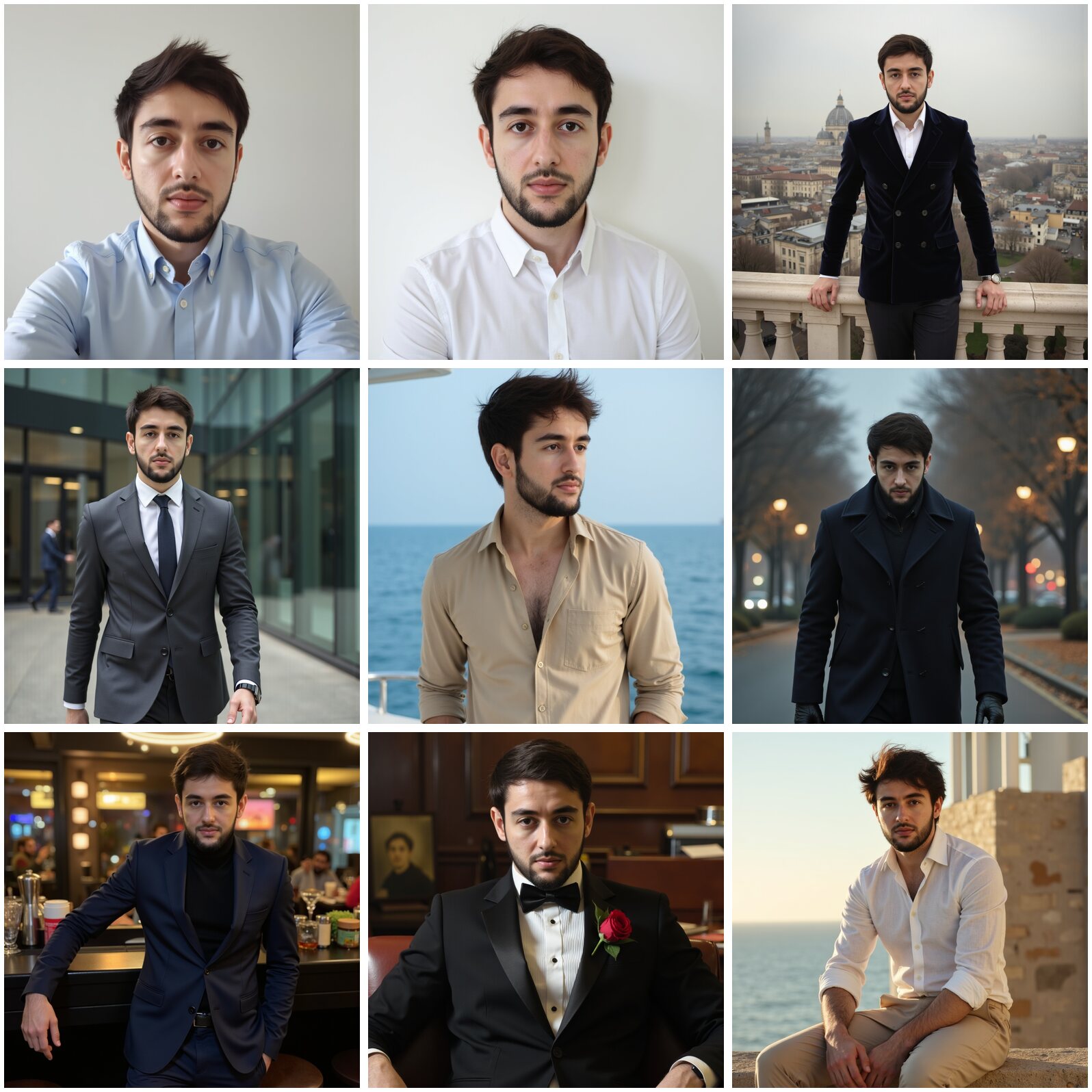
Narkis solves a different problem:
- Your own model: 15 to 20 selfies train a personal model in a median 6.5 minutes, and it makes new photos of your real face in any setting.
- Private by design: your uploads train only your model, with no human review, and you can delete the model and data whenever you want (facts sheet).
- No subscription: $27 for up to 200 photos, credits never expire (pricing).
- Built for real use: LinkedIn photos, dating profile photos, team headshots and travel shots.
For scale, a photographer's headshot session costs a median $321 across 822 US cities in our data (headshot cost calculator). Checking other apps before you upload? We read the policies of Glam AI, Meitu, Hypic, Lensa AI, Remini, FaceApp and Picsart, and every AI headshot option is side by side in the comparison.


